
Dark Tint. Not a flex.
Window tint laws might seem annoying – especially if you want more privacy, UV protection or just like the way it looks. But these rules exist to balance those preferences with something that matters more: being able to see clearly, and be seen, on the road.
We'd like to shine a little light on the dark side of tint what that means in everyday life.
Window tint might seem like a small detail, but it plays a bigger role than many drivers expect. Being able to see clearly and respond quickly matters - especially in busy or unpredictable situations.
That's why window tint limits exist.
Tint that is too dark can:
- make important non-verbal communication harder;
- limit visibility;
- slow reaction time; and
- increase risk in emergencies or during traffic stops.
Following tint limits helps you see what's happening around you. It also helps others see you. It supports first responders when they need to act quickly and can lead to calmer interactions during enforcement stops. All of this helps make everyday driving interactions clearer for everyone.
Tint limits in the Yukon
The Yukon context
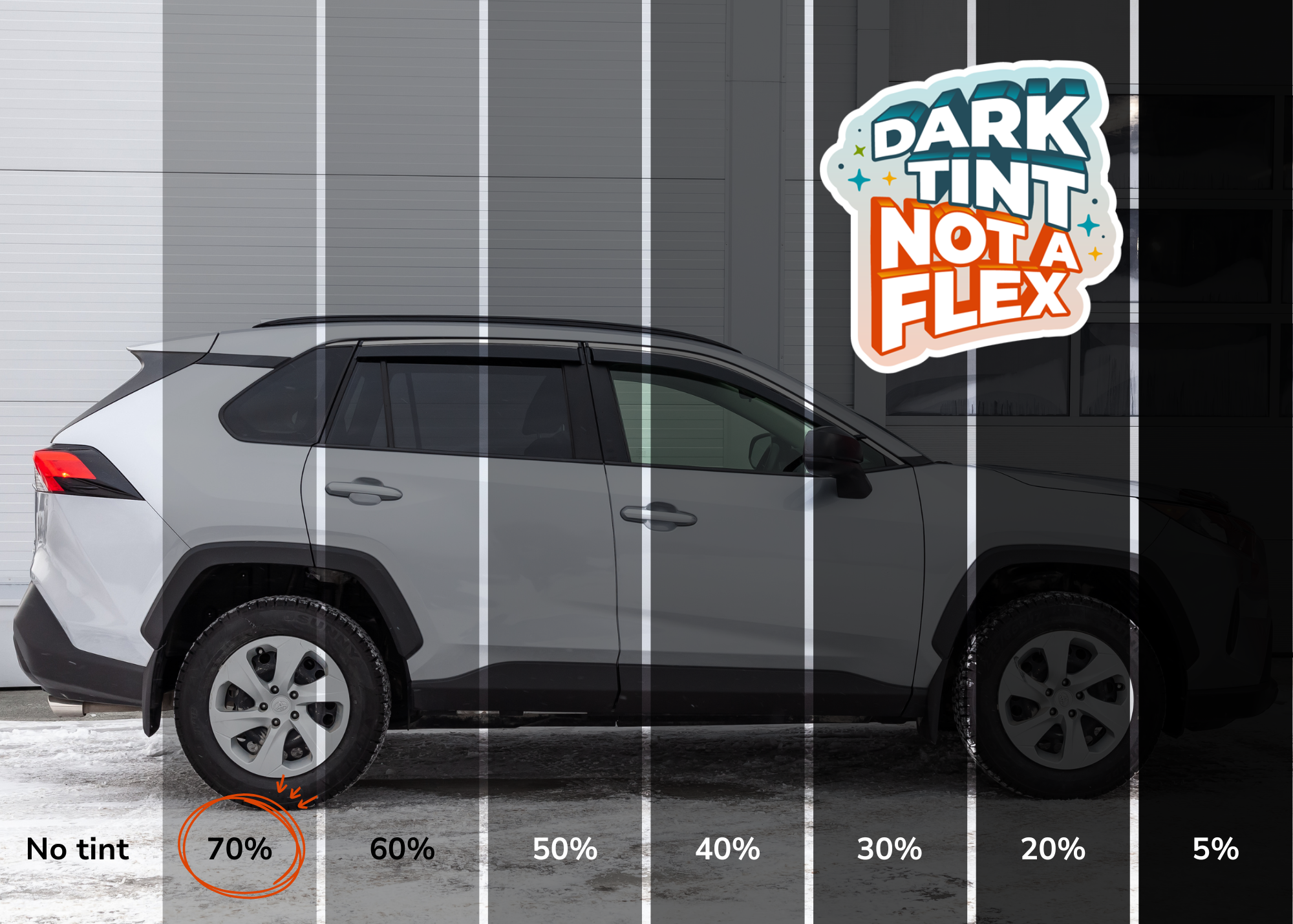
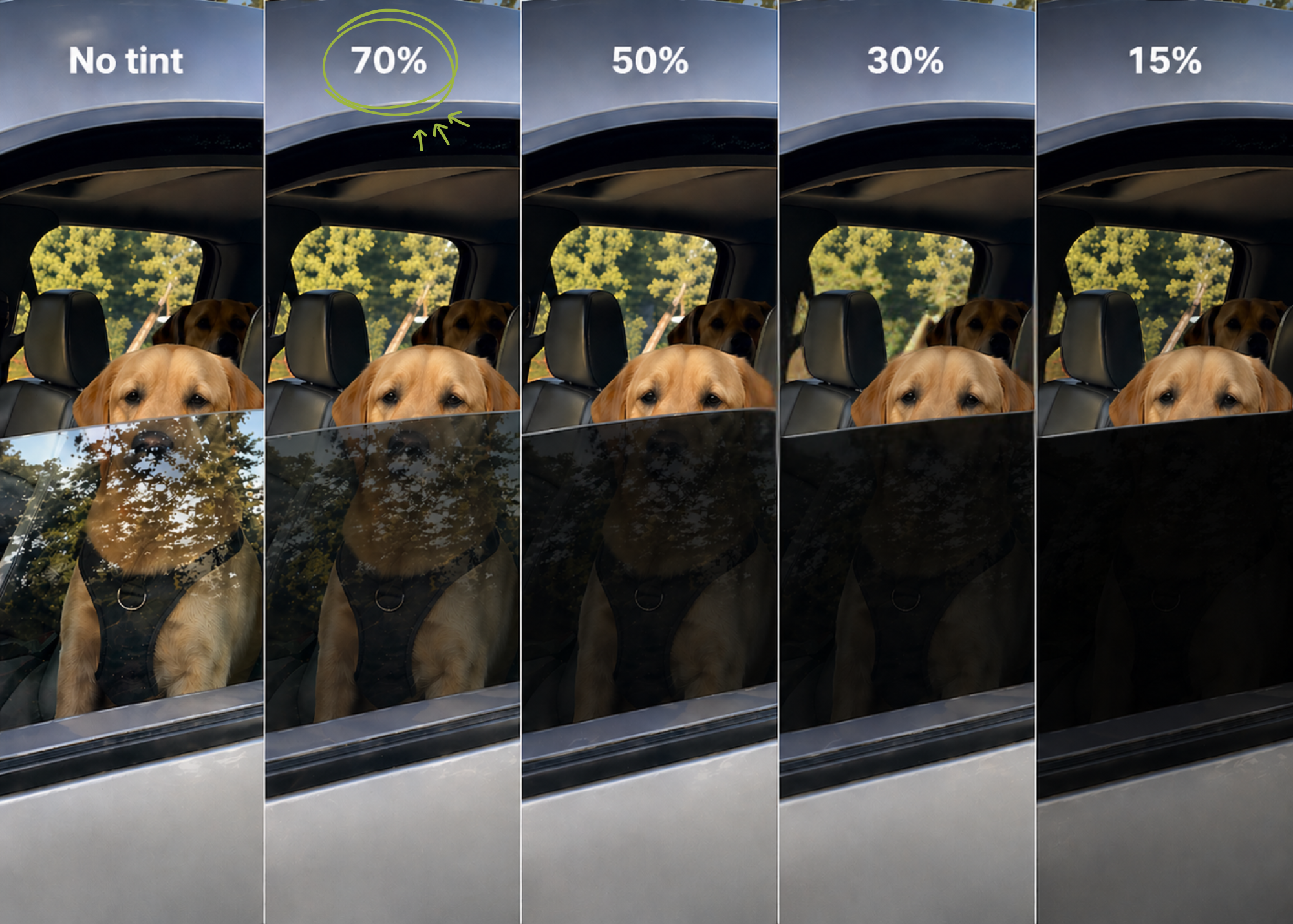
Tint is measured by how much light can pass through the glass. This is called visible light transmission, or VLT.
Higher percentage = lighter tint
Lower percentage = darker tint
For example, 30 per cent tint only lets in 30 per cent of light. This is much darker than what's allowed for the front windows of your vehicle.
In the Yukon, at least 70 per cent of the light outside your car must be able to filter through your:
- windshield;
- driver side window; and
- front passenger side windows
That means 70 per cent tint is the darkest tint you should put on your front windows.
Why visibility matters
See. Be seen.
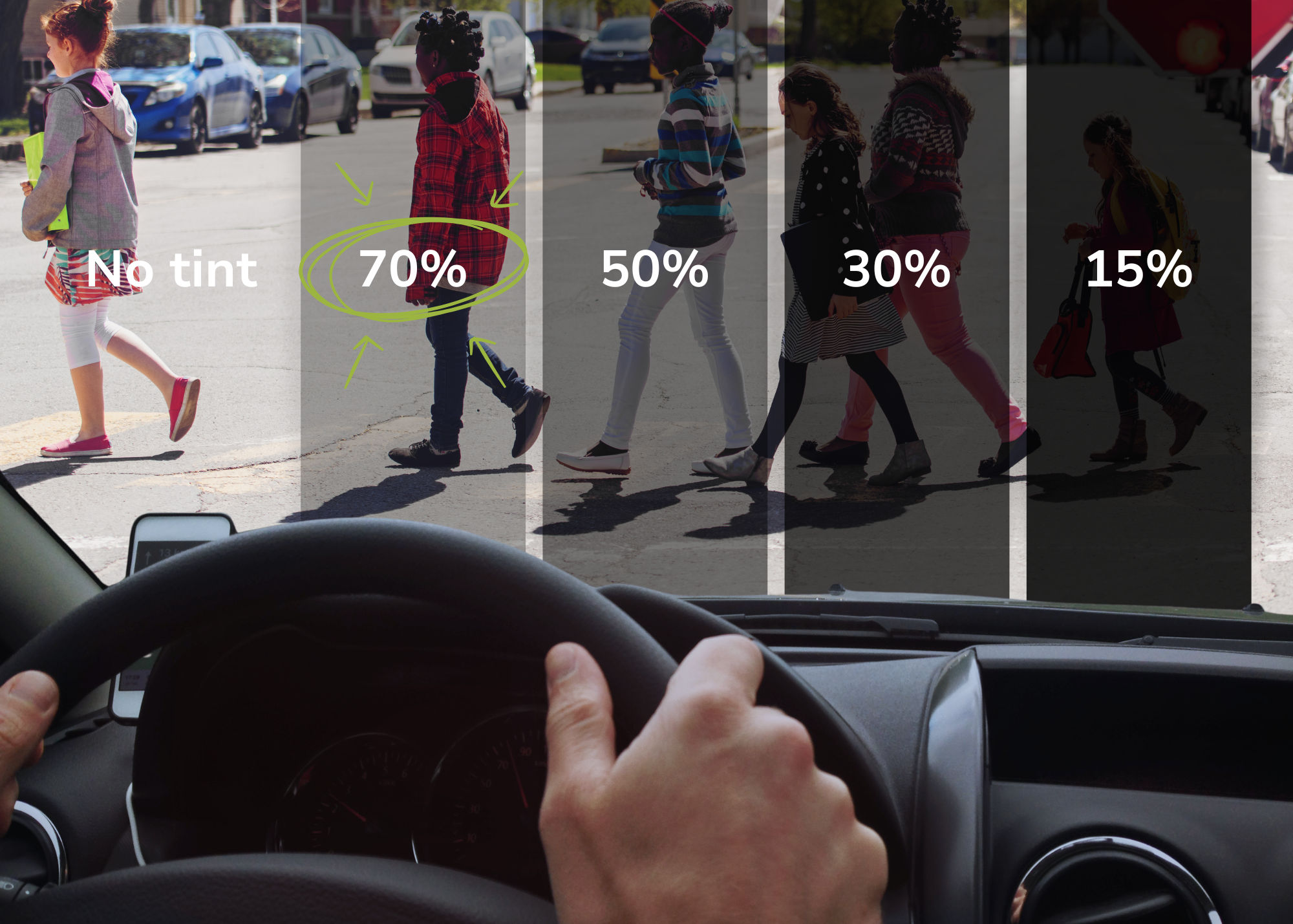
You need to see clearly to drive safely. When you can see what’s happening around you, you can react faster. When others can see you – your face, your eyes, your intentions – they can respond more predictably.
In places like busy crosswalks, school zones or parking lots, people rely on eye contact and small cues to know a driver has seen them. Dark tint makes that quick communication harder.
The road is safer for everyone when everyone can see each other clearly.
Risks of dark tint
Too dark = too risky
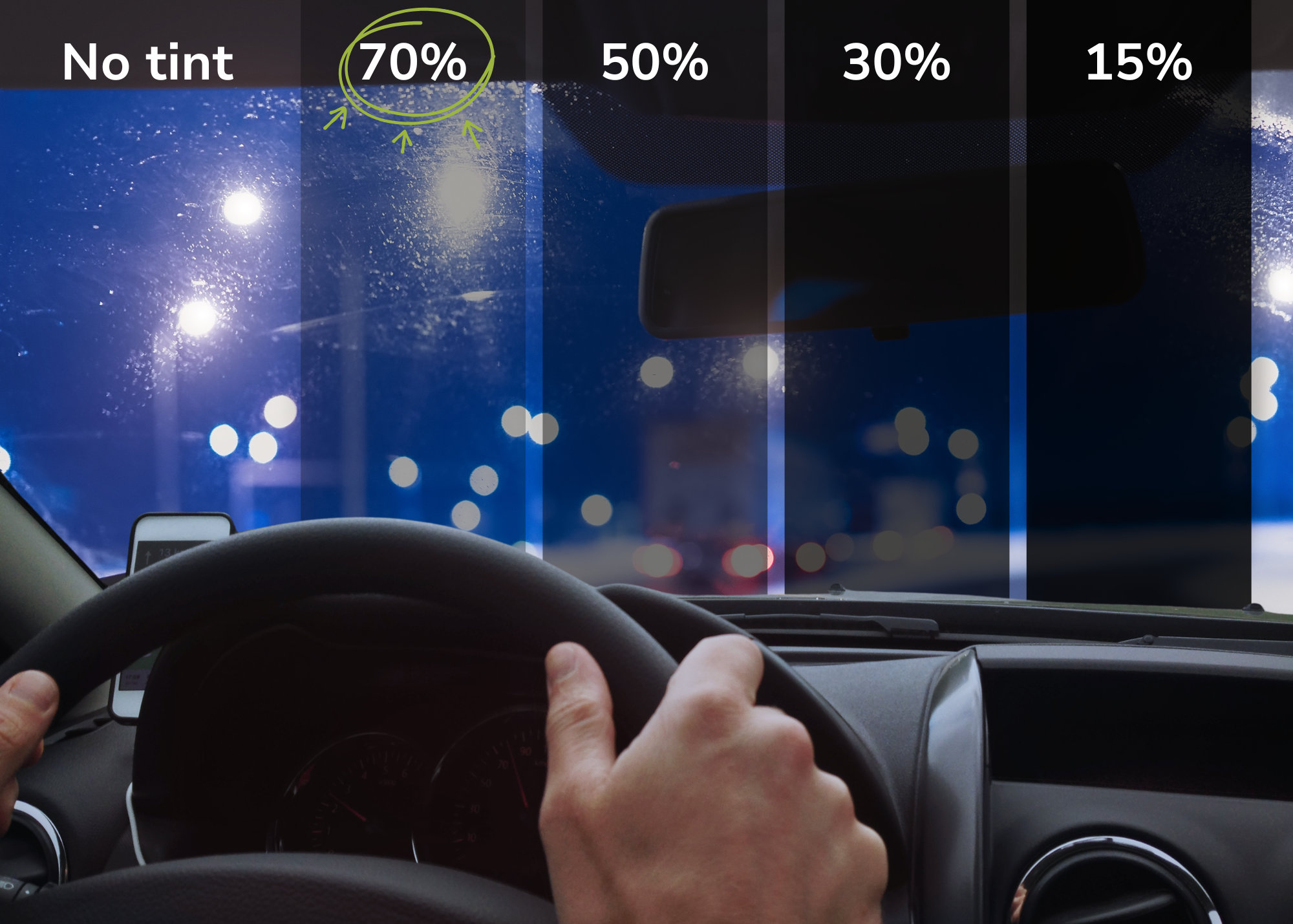
Dark window tint might look good, but it comes with increased risks.
Dark tint can:
- reduce visibility, especially at night or in bad weather;
- slow your reaction time when seconds matter;
- make it harder to see hazards; and
- interfere during an emergency.
Vehicle windows are designed to break in a specific way during emergencies. Aftermarket tint can interfere with that.
In a crash or medical emergency, first responders may need to break a window to help you. Tint and adhesive film can slow them down or create sharp fragments, putting both you and responders at greater risk.
Traffic stops and enforcement
Tint is shady
Dark window tint can complicate interactions on the road.
Police need to see inside a vehicle during traffic stops. Having clear lines of sight helps keep everyone safe. Dark tint can make that harder, which may lead to longer or more tense interactions. That’s why many Canadian jurisdictions limit how dark front window tint can be.
Extremely dark tint can also draw attention during enforcement stops. Drivers may be asked to lower their windows during traffic stops.
Illegal tint may lead to fines or orders to remove the tint.
There’s nothing wrong with wanting privacy or comfort in your vehicle. But remember: vehicles are not considered private spaces under the law. Keeping your tint within legal limits helps ensure your vehicle stays visible, predictable and safe on the road.
Drive with visibility in mind
The takeaway
- Choose window tint that meets the Yukon's legal limits, especially on your windshield and front side windows.
- Make sure you can see clearly in low light, bad weather and busy driving situations.
- Keep your face and eyes visible so pedestrians, cyclists and other drivers can see your cues.
- Think about emergencies - dark tint can slow help from first responders.
- Avoid unnecessary stops or fines by keeping your tint within legal limits.
- Help keep the road safer for you and everyone around you.
Contact us
If you have questions, email [email protected] or phone 867-667-8835.
If you'd like to check the tint on your vehicle's windows, visit the Motor Vehicles office. We have a tint metre.