
This is a joint news release between the Government of Yukon and the City of Whitehorse.
Last December, record-breaking electricity demand and extreme cold pushed the Yukon’s electricity system close to its limits, highlighting the need for immediate action to strengthen winter reliability. Since then, the Government of Yukon has taken steps to reduce peak electricity demand, strengthen emergency preparedness and improve the territory’s energy security. While significant challenges remain, these actions are helping the Yukon better prepare for periods of extreme cold.
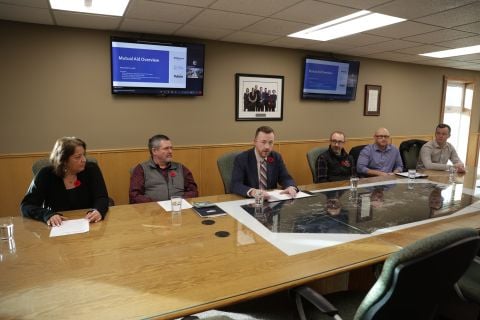
On November 6, the Government of Yukon and the City of Whitehorse are announcing another practical step to protect the electrical grid, with an agreement to double the amount of electricity demand that can be removed from the grid through participating government buildings during emergencies.
The expanded participation in Yukon Energy’s mutual aid protocol will increase available demand reduction from 1.4 megawatts last winter to 2.8 megawatts this winter, providing an additional layer of protection against rolling blackouts.
Under the new agreement, the City of Whitehorse is adding the Public Safety Building and the Whitehorse Operations Building, alongside the Canada Games Centre, which has been included in previous years.
The Government of Yukon will reimburse the City for the cost of fuel to run the backup generators whenever its buildings are called upon to participate in mutual aid.
Alongside the City’s leadership, the Government of Yukon is adding four new buildings to the protocol: Copper Ridge Place, the Jim Smith Building, Yukon University and the Justice Centre. These facilities will join Whistle Bend Place, which has been ready to participate in previous years.
The mutual aid protocol is an emergency measure that allows large facilities to temporarily disconnect from the electrical grid and operate using their own backup generation when electricity demand approaches the limits of the system. This reduces pressure on the grid, helps keep demand with available supply and lowers the risk of rolling blackouts.
The expansion is the latest in a series of actions taken by the Government of Yukon following the record electricity demand experienced in December 2025, when winter peak demand reached 127 megawatts.
This year, the government launched the Dependable Grid Program to help reduce winter peak electricity demand. More recently the government announced expanded incentives to encourage and assist families to participate in Yukon Energy’s Peak Smart Program. These incentives will further help households reduce electricity consumption during periods of high demand.
These immediate actions are part of the development of the Winter Reliable Energy Plan. The WREP is a long-term plan that will identify the longer-term investments and infrastructure improvements needed to build a more reliable, resilient, affordable and safe electricity system. Expanding participation in the mutual aid protocol is another step in that ongoing work.
Any other organizations interested in participating in the mutual aid protocol are encouraged to contact the Government of Yukon for more information.
Last December, I told Yukoners plainly that our electricity grid was under significant strain and that we needed to act decisively. We came dangerously close to rolling blackouts, and I made it clear that protecting the reliability of our electricity system would be a priority. Since then, we have been taking practical steps to reduce demand, strengthen emergency preparedness, and build a more reliable energy system. We expanded incentives to help Yukoners reduce electricity use during peak periods and are advancing long term energy planning. Today we are taking another important step. By working with the City of Whitehorse are doubling the amount of electricity we can remove from the grid during an emergency. The challenges we identified last December have not disappeared. But we are acting on them. Every additional megawatt of demand we can take off the grid during extreme cold gives our utilities more flexibility to protect homes, businesses, and essential services
Yukon winters are unpredictable, and emergency preparedness is a shared responsibility. The steps being taken to strengthen electricity reliability are an important part of helping our communities withstand extreme winter conditions. Even though these measures are in place, it's still critical for everyone to take steps to protect themselves and their families. That is as easy as having a 72-hour emergency kit on-hand in case of an emergency.
Everyone has a role to play in emergency preparedness. The City works closely with partners through the mutual aid protocol and other initiatives to prepare for potential emergencies and respond effectively. We are pleased to be strengthening these partnerships with the Government of Yukon and other agencies. As we prepare for the winter season, we encourage all residents to make a plan and prepare a 72-hour kit in the event of an emergency
The mutual aid protocol gives us another tool to help manage electricity demand during periods of peak use. This program helps keep the system stable and reliable when Yukoners need it most. We appreciate the strong collaboration and partnership between the Government of Yukon, the City of Whitehorse and all participants in the mutual aid protocol.
-
Yukon’s winter peak electricity demand reached a record 127 MW in December 2025.
-
The mutual aid protocol was developed by the utilities for the areas they serve. This agreement strengthens the protocol by including more government buildings in Step 4.
-
Government buildings would only be asked to disconnect from the electrical grid after mines and mine remediation sites have reduced their electricity use and ATCO Electric Yukon has turned on its standby diesel generators to increase supply. The last step of the protocol, prior to implementing rotating outages, includes public alert through the Alert Ready system. Participating facilities only disconnect from the grid when they can do so safely.
-
In previous years, the Canada Games Centre and Whistle Bend Place have been ready to disconnect from the grid but have only done so for the purpose of training exercises. While this part of the mutual aid protocol has never been enacted, it provides a valuable safety net.
-
This year, the City of Whitehorse released the Whitehorse Emergency Preparedness Guide to help residents prepare for emergency scenarios in the city.
Tim Kucharuk
Press secretary, Cabinet Communications
867-335-2419
[email protected]
Panebi Wilson
Communications, Energy, Mines and Resources
867-332-9098
[email protected]
Natalie Van Sterthem
Communications, Community Services
867-333-9159
[email protected]
Matthew Cameron
Manager, Strategic Communications, City of Whitehorse
867-689-0515
[email protected]